

The Quietest Room in the House: Why Sound Insulation Belongs in Every Wellness Home
Quiet you can feel every night. Why we insulate every interior wall, and how Mass Loaded Vinyl blocks sound room to room.
Greenberg Construction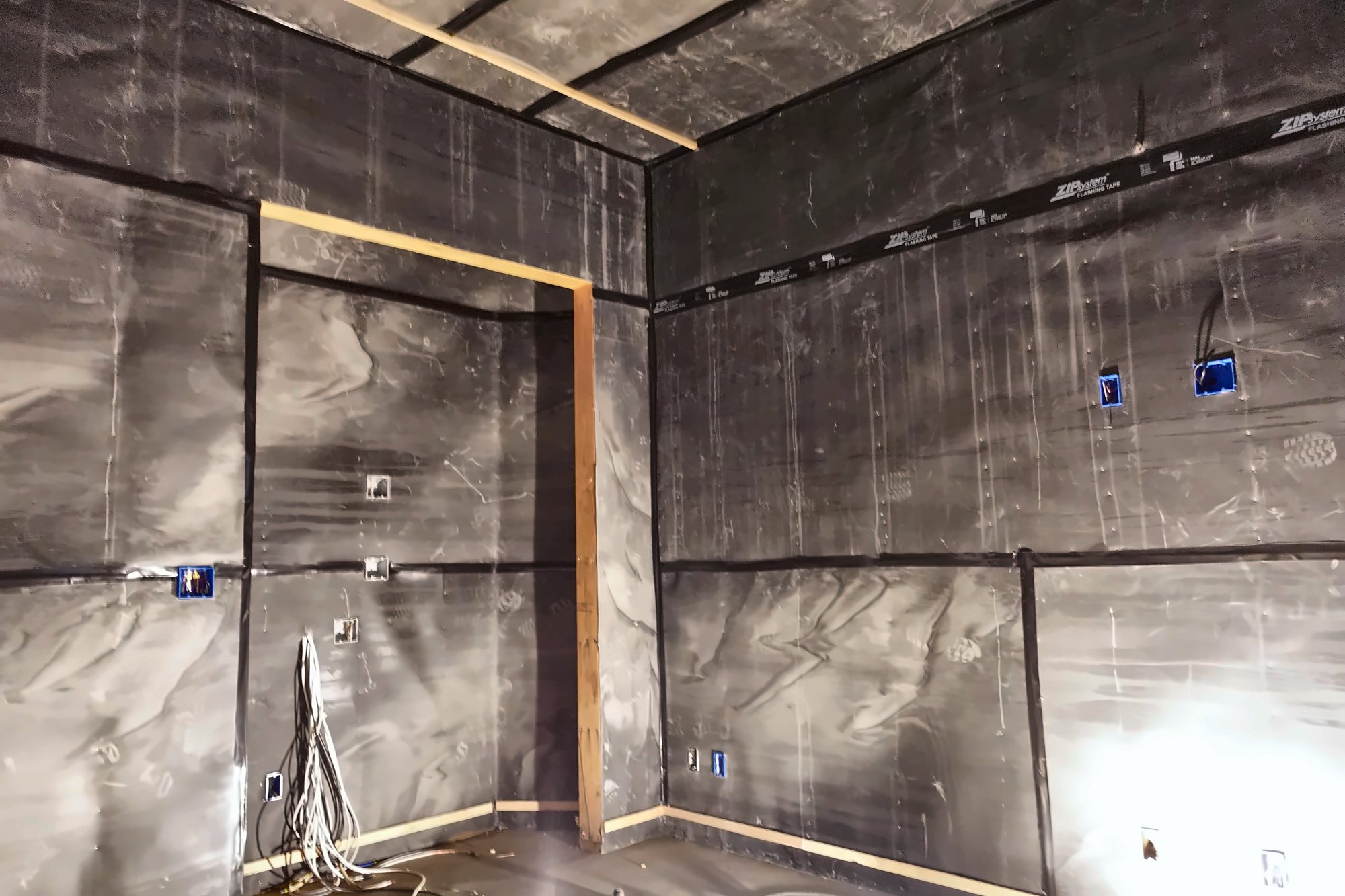
We talk a lot about what makes a home healthy: clean air, natural light, non-toxic materials. But one of the most overlooked ingredients of wellness is something you can't see at all: quiet.
Noise is more than an annoyance. The World Health Organization links ongoing noise exposure to poor sleep, higher stress and reduced concentration. A TV through the bedroom wall, a flushing toilet at 2 a.m., footsteps from the ADU next door: these small intrusions add up night after night. A quiet home lets your body and mind fully rest.
Pictured above: a media room in one of our clients' homes, wrapped in Mass Loaded Vinyl before drywall.
What most builders skip
Most contractors insulate only the exterior walls, because that's what energy code requires. Interior walls are left hollow, and a hollow wall carries sound from room to room.
At Greenberg, we insulate every interior wall as part of our standard quote. It's one of the simplest upgrades a home can get, and one of the hardest to add later.
The secret weapon: Mass Loaded Vinyl
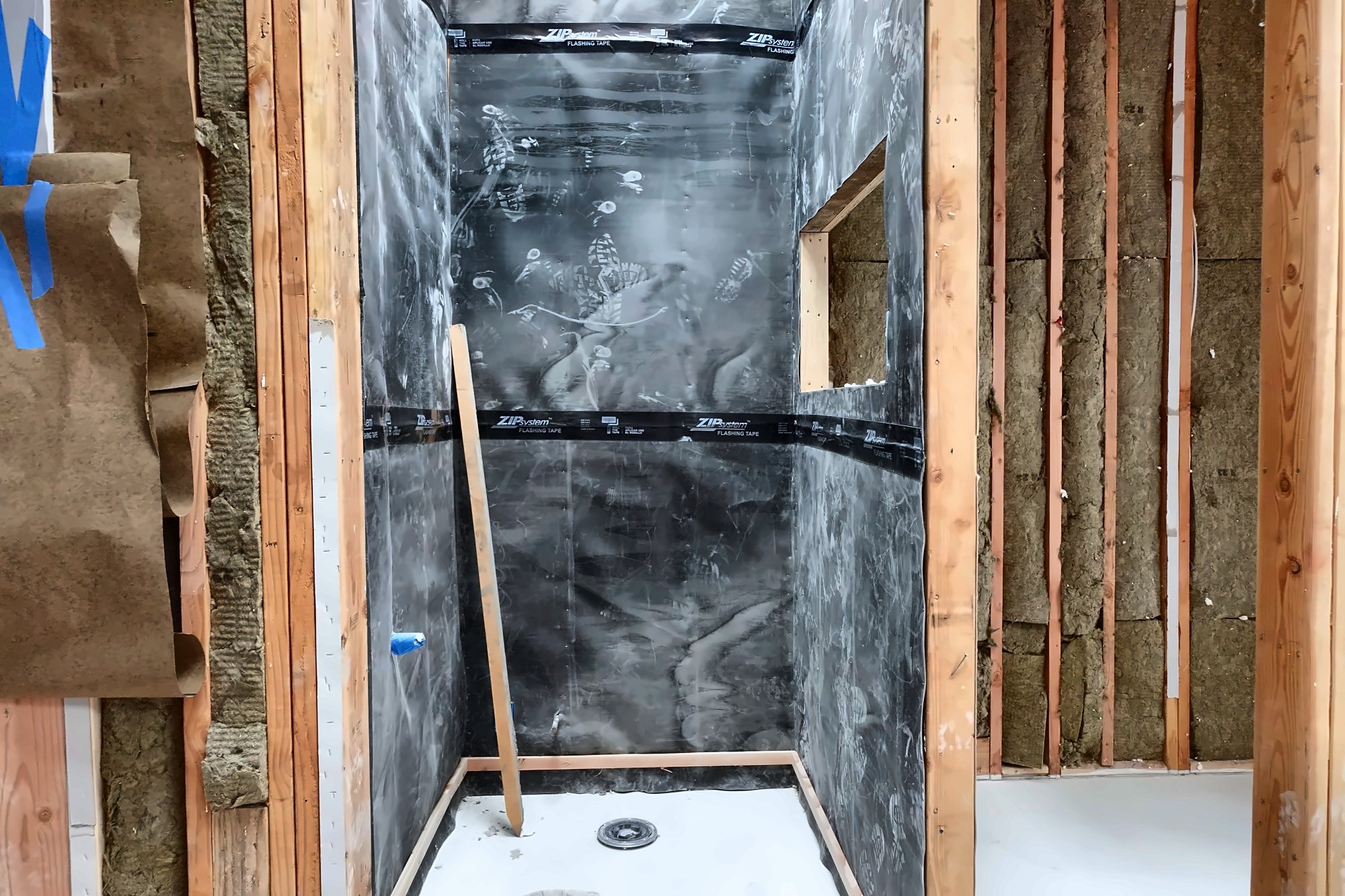
For rooms where quiet matters most, we go a step further with acoustic Mass Loaded Vinyl (MLV). It's a thin, heavy, flexible sheet (about a pound per square foot) installed over the framing before drywall. Its density blocks airborne sound that insulation alone lets through.
Insulation absorbs sound inside the wall. MLV blocks it from passing through. Together, they work far better than either one alone.
Search online and you'll find MLV mostly in recording studios and luxury homes with professional home-theater designers. Most homeowners have never heard of it. Greenberg makes it available to every client, for a nominal additional cost.
See it in one of our clients' homes
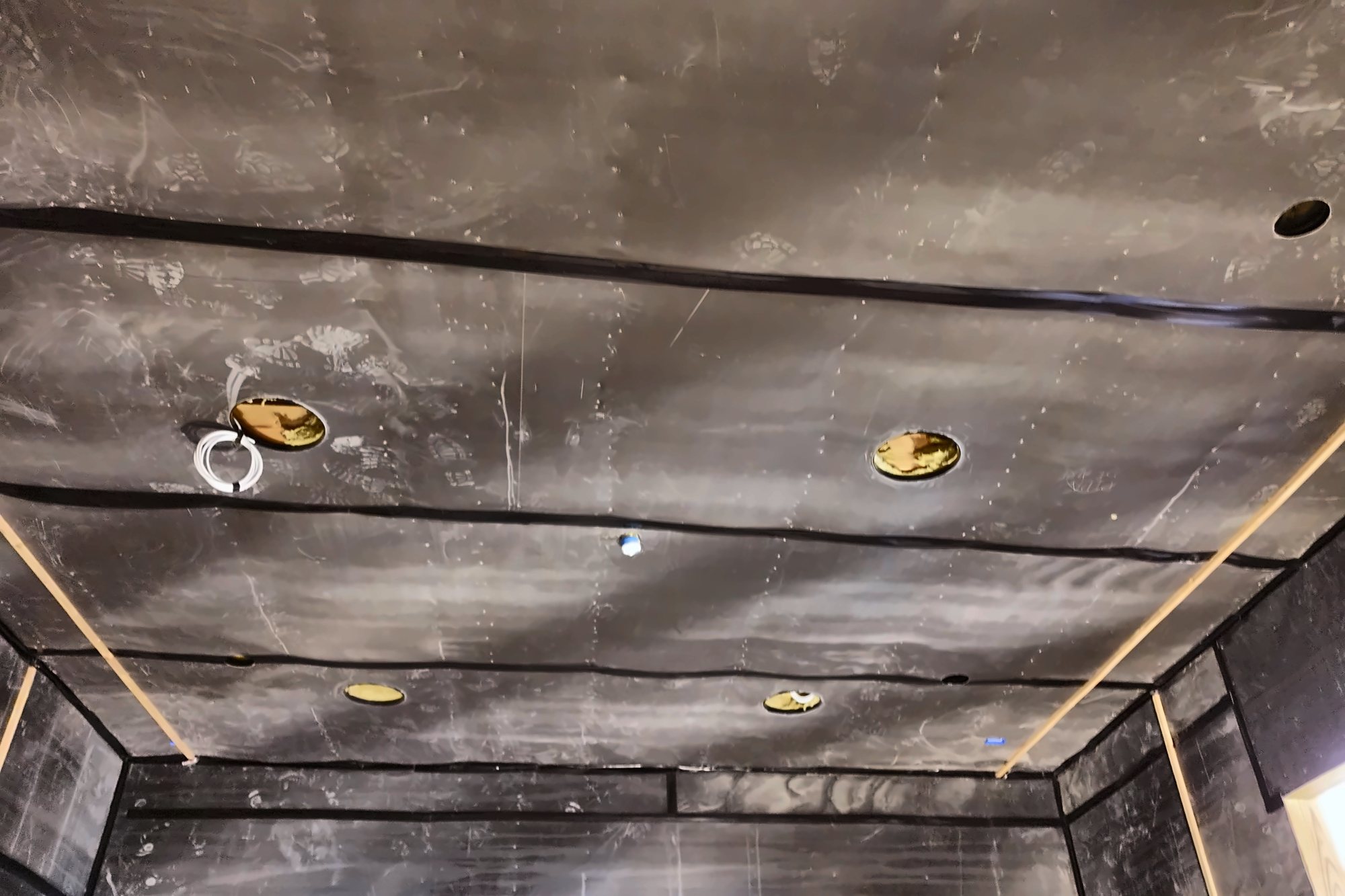
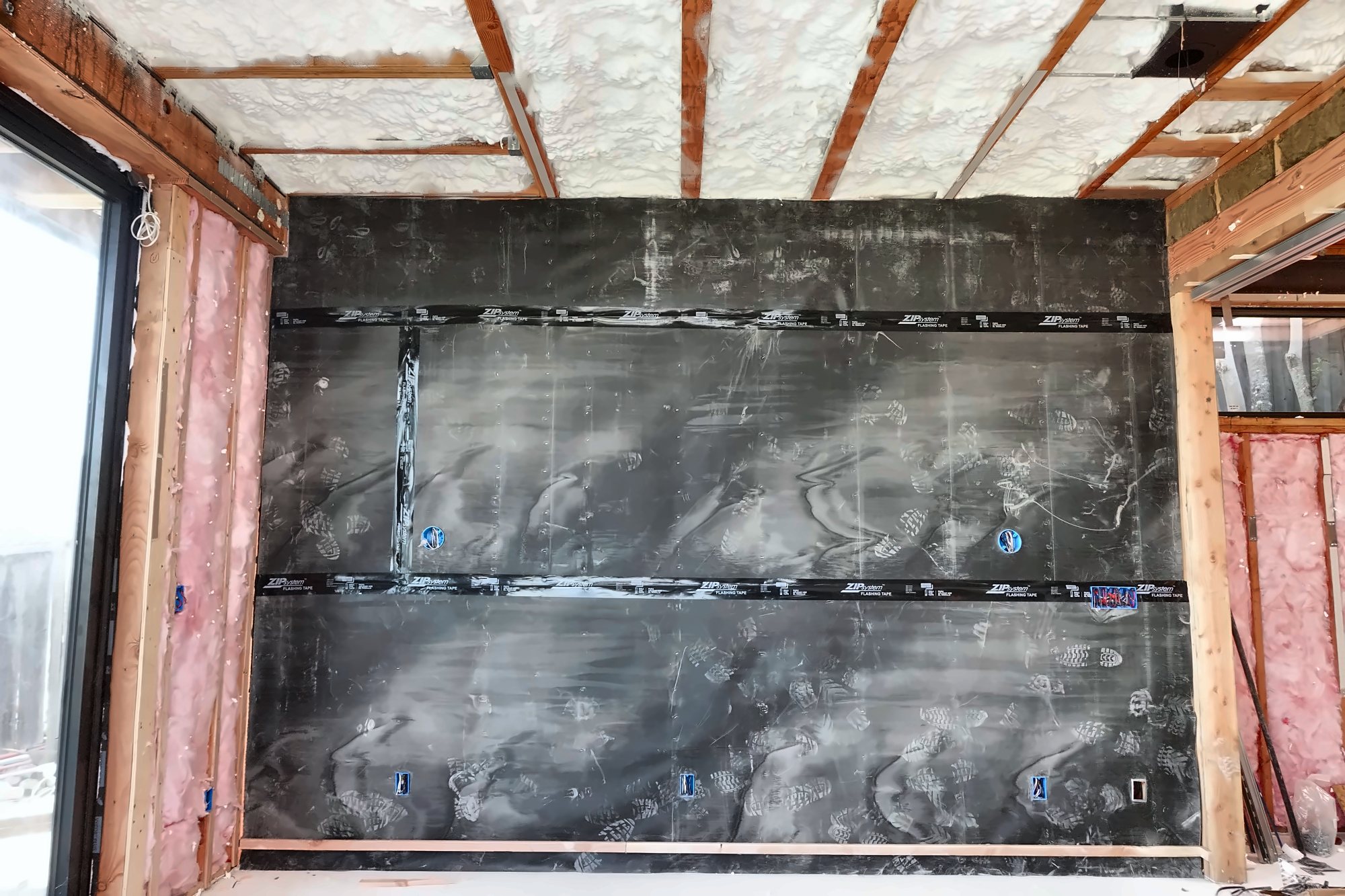
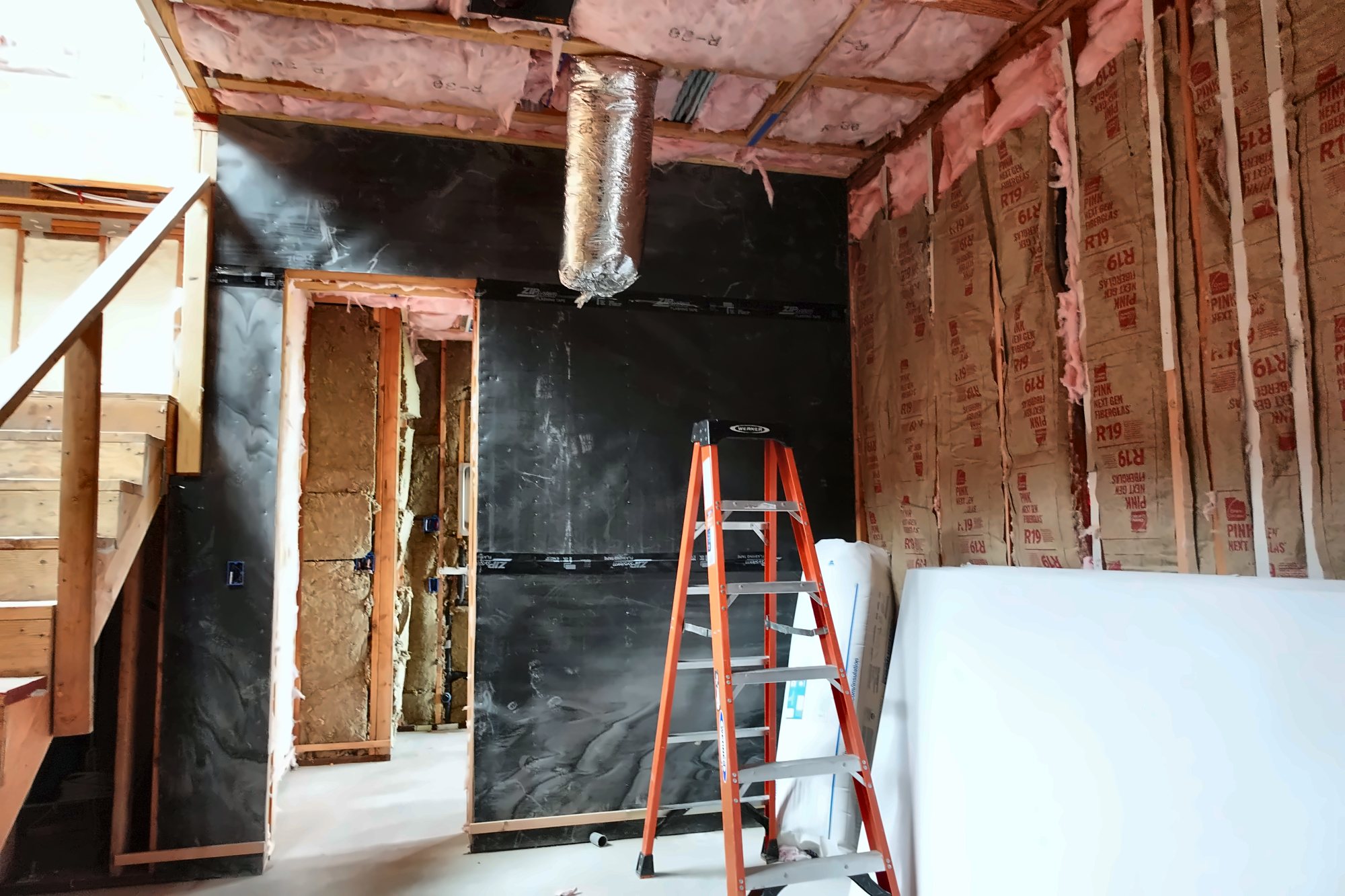
Here's exactly what we did in one of our clients' homes. These are the real walls, photographed before drywall.
Where it matters most
- Main bedroom: deeper, uninterrupted sleep
- Media room: movie-night sound stays in, and the rest of the house stays calm
- Bathrooms: privacy that guests and family appreciate
- Shared walls with an ADU: two homes that feel independent
- Home offices and nurseries: focus for adults, naps for little ones
A small investment with a lifelong return
Once the drywall goes up, adding sound insulation means tearing walls apart. During construction, it's a modest line item. And you'll feel the return every night you sleep through the evening, every call you take without background noise, and every movie you watch without worrying about who's asleep.
A quiet home is a healthier home. Ask us about adding Mass Loaded Vinyl to your project. Start the conversation
Part 1 of 8 in Healthy by Design, our Wellness series in the Journal. Next: Mold Behind Drywall in Older Homes: What to Look For and What to Do. See how Greenberg builds for wellness.
Sources: WHO, Environmental Noise Guidelines for the European Region (2018)